Leave It Alone: The Case for Cupboarding Your Parkin Until December
The last rocket has fizzled out over the fells, the bonfire is a damp grey heap, and somewhere in a kitchen in Bentham there is a tin of parkin doing absolutely nothing. Good. That is the entire point.
This is a website built on temptation. We are not, generally speaking, in the business of telling people to wait. But parkin is the exception that proves the rule — a cake that is noticeably worse on the day it is baked than it will be three weeks later. It asks for restraint. It gives back stickiness, depth and a treacle-dark crumb that you simply cannot rush into existence.
So consider this a small, affectionate argument: the best festive bake in the Lune Valley might be the one you deliberately ignore until December.
A cake with Yorkshire written through it
Parkin is oats, treacle, ginger and fat, and not much else. Golden syrup if you like it softer, black treacle if you like it brooding, a little brown sugar, a spoon of ground ginger with cinnamon and a scrape of nutmeg, sometimes clove. Oatmeal gives it a coarse, honest texture that no plain ginger cake can imitate.
Its heartland is industrial Yorkshire — the sort of cake that came out of northern kitchens when treacle was cheap and heat was expensive, and when a bake needed to last. Oats were the local grain; treacle arrived by the barrel; ginger was the warmth that made a cold month bearable.
Bentham sits close enough to the county line that the Lancashire-versus-Yorkshire argument rumbles on pleasantly in tea rooms. We are not going to settle it here. What matters is that a proper parkin tastes of this landscape: plain, dark, a bit austere at first, then unexpectedly generous.
The chemistry of doing nothing much
Why does a week-old parkin beat a fresh one? There are three quiet processes at work, and none of them require you to lift a finger.
The oats are a slow sponge. Oatmeal is thirsty. On day one it pulls moisture out of the syrup and the crumb feels dry and slightly tight. Over the following days it releases that moisture back into the surrounding cake, and the whole thing relaxes into something softer and more cohesive.
Treacle and syrup hold on to water. Golden syrup and black treacle are full of sugars that cling to moisture — hygroscopic, if you want the word. That trapped water slows the staling process that normally turns a sponge into sawdust, which is why parkin keeps for weeks when a Victoria sandwich would be a sorry sight by Thursday.
Everything sharpens, then settles. Fresh from the oven, the ginger is bright and slightly aggressive and the treacle tastes almost bitter at the edges. Given time, the spices mellow and marry, the sugars soften, and the top takes on that faintly tacky sheen that parkin lovers look for. The crumbly becomes fudgy. The loud becomes deep.
There is nothing mystical going on. It is just time doing what time does, with a cake that was built to survive it.
A tasting timeline, from Bonfire Night to the Christmas table
If you baked — or bought — around the fifth of November, here is roughly what you have ahead of you.
- Days one to three. Crumbly at the edges, a little tight in the middle, spices still standing apart. Perfectly nice with a mug of tea, but not yet itself. Resist the urge to judge.
- End of week one, around 12 to 14 November. This is where it turns. The crumb settles, the syrup rounds off, and the first properly sticky slice appears. Cut small squares and wrap the rest back up.
- Late November. Now the flavour is layered rather than loud. The top is tacky, the inside is dense but not heavy, and it starts to taste like the idea of parkin rather than a list of ingredients.
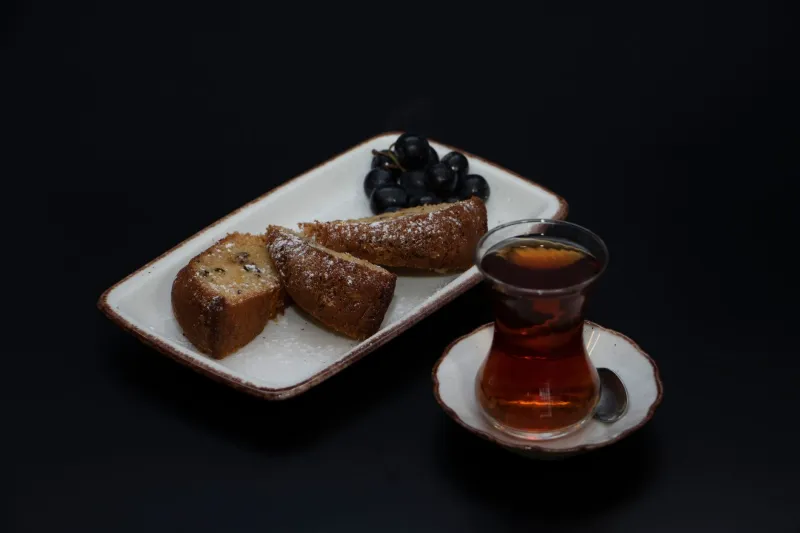
- December. This is the target. Dark, fudgy, almost toffee-like, with the ginger sitting quietly underneath everything else. It slices cleanly, travels well in a tin, and holds its own against a wedge of crumbly white cheese or a glass of something sweet and dark.
- Into the new year. It will keep going, honestly. But by then it has become a different cake — drier at the edges, more of a biscuit mood. Nothing wrong with that. Just not the point.
A practical note: keep it in an airtight tin, wrapped in greaseproof, somewhere cool that is not the fridge. Fridges dry cake out and make the spices taste like a cupboard. And cut with a warm knife if you want clean squares rather than a pleasant mess.
Where to find a proper tin
Not every slice sold as parkin deserves the name. A few things to look out for when you are buying around Bentham and the surrounding villages.
It should be dark — genuinely dark, not the pale gold of a ginger sponge. It should look slightly uneven, with visible oats and a faintly damp top. Ask, if there is someone to ask, whether it has been rested; a bakery that ages its parkin will be pleased to tell you so, and one that does not will look baffled. The best sources tend to be the less glamorous ones: farm shop counters towards Ingleton and Kirkby Lonsdale, market stalls in Settle, bakery shelves in the village, and the homemade tins that appear at church and village hall sales in November. Wrap it the moment you get it home and then leave it alone.
If you are baking your own, size matters more than recipe. A deeper, smaller tin gives you the dense, sticky result you want; a shallow tray gives you something closer to traybake, which is fine but forgettable. Line it well, bake it low and slow, and do not panic when it looks underdone in the middle.
The argument, briefly stated
We live in an age of same-day everything. Same-day delivery, same-day streaming, cake in a box within the hour. Temptation has never been easier to satisfy, and that is precisely why a cake that demands a fortnight of patience feels almost rebellious.
Parkin is not an indulgence you consume. It is an indulgence you keep — a small, dark promise on the top shelf that improves every time you decide not to touch it. In a season that pushes you towards the instant and the extravagant, there is something deeply satisfying about a treat whose whole personality is restraint.
So bake it, buy it, wrap it, and then walk away. Come December, when the tin is opened and the first slice comes out dense and sticky and dark as a winter afternoon, you will understand why the waiting was never the boring part.