After the Ashes: Why Bonfire Toffee Should Outlast the Fireworks in Bentham
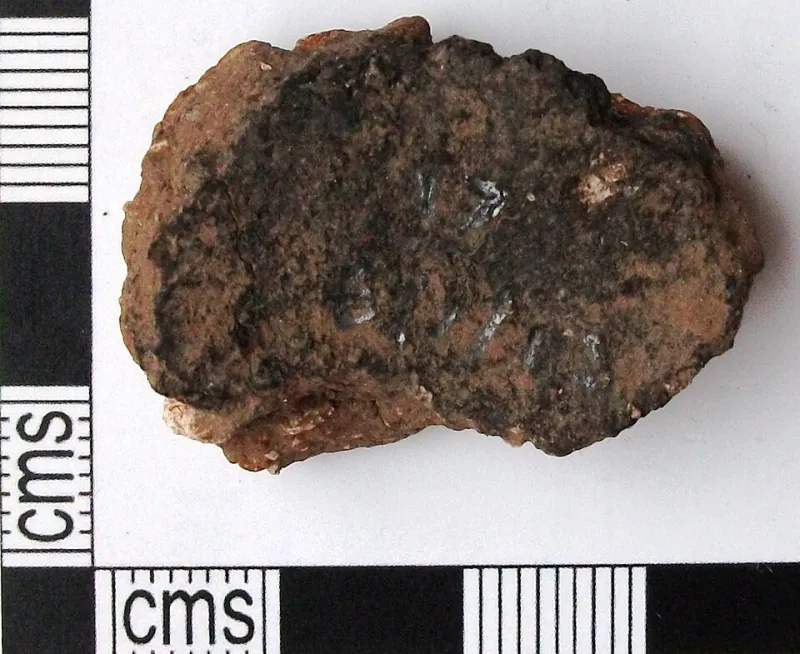
Photo: Royal Institution of Cornwall, Graham Hill, 2012-01-08 20:23:36, CC BY-SA 2.0, via Wikimedia Commons
On 14 November, the fireworks are a memory and the last paper bag of bonfire toffee is probably already gone. That is the odd thing about this particular sweet: it arrives with a bang, sits beside the sparklers for a fortnight, then disappears from Bentham's counters as if it were part of the clean-up operation. This month I went looking for the dark, brittle stuff after the event, partly out of greed and partly to test a small theory. The theory is that bonfire toffee is not really a fireworks sweet at all. It is a late-autumn sweet that has been crammed into too narrow a window.
The Week After the Sparks
There is a particular silence that follows 5 November in a Yorkshire town. The air loses its sulphur edge, the hedgerows keep a few scraps of rocket casing, and the shops quietly rearrange their shelves. Mince pies begin their long march. Chocolate coins appear in net bags. The bonfire toffee, if it was there at all, is reduced to a few sticky crumbs in the corner of a tray.
In Bentham, that feels like a small loss. We are good at autumn here. We have the weather for it, the dark afternoons for it, and a proper appetite for things made with treacle and butter. Bonfire toffee belongs in that company. It is not a novelty to be bolted onto a fireworks display and then forgotten. It is a seasonal sweet with a bit of bite, and it deserves a longer run than the rockets.
What We Mean by Bonfire Toffee
The name covers a few variations, but the core is consistent: a dark, hard toffee made with treacle or black treacle, sugar and butter, boiled until it sets into a brittle sheet. It is broken into shards, sometimes dusted, sometimes not, and sold in paper bags that quickly become part of the experience. The best pieces are glossy rather than greasy, deep brown rather than black, and they snap cleanly between the teeth before dissolving into a smoky, slightly bitter sweetness.
It is not cinder toffee, though the two often share a shelf. Cinder toffee is the honeycomb stuff, airy and shattery, all golden holes and caramel. Bonfire toffee is denser and more serious. Nor is it fudge, which is softer and sweeter, or parkin, which is a cake with oats and ginger and its own claim on November. Bonfire toffee is the hard-edged one. It is the sweet that makes you slow down.
Some counters label it plot toffee or bonfire rock, and in parts of the north it has picked up other local names over the years. The exact recipe varies from shop to shop, which is part of the fun. One batch might lean more heavily on black treacle, giving a darker, almost liquorice-adjacent edge. Another might be buttery and milder, with a finish closer to a hard caramel. Both are valid. Both are worth seeking out.
A Small Circuit of Counter Finds
My search around Bentham was not a grand tour. It was a series of small stops, the kind that fit between other errands. A counter in High Bentham had a tray of dark shards near the till, wrapped in squares of greaseproof paper and twisted at the ends. The pieces were uneven, which is exactly right. A neat rectangle of bonfire toffee suggests a machine has been too involved. These had the look of something broken by hand, and they snapped with a satisfying crack that echoed around the shop.
Further along, a shop towards Low Bentham had a mixed bag labelled simply bonfire mix. It was mostly toffee, but there were a few pieces of cinder toffee in there too, and a couple of toffee apples wrapped in cellophane. The toffee apples were a reminder that the season has more than one expression. They also sold out quickly, which tells you something about demand. People want these flavours in November. They just need to be offered them after the fifth, not only before it.
A bakery tray provided the quietest find: a small stack of bonfire toffee slabs, cut thick and sold by weight. These were softer at the edges than the shards, with a deeper butter note, and they lasted longer in the mouth. I ate one on the walk back with a flask of tea, and it was one of the better mouthfuls of the month. That is not a complicated pleasure. It is just a good sweet in cold weather.
Why It Vanishes So Quickly
The reasons are partly practical. Bonfire toffee is a seasonal line for many shops, ordered for a specific date and cleared afterwards. It is also fragile. Changes in humidity can make it tacky, and a tray of broken shards does not look as tidy as a tray of wrapped chocolates. Once the fireworks are over, the shelf space goes to Christmas. It is hard to argue with the economics of that, especially in a small shop with limited room.
But seasonal retail has become strangely elastic in other directions. Mince pies arrive in October. Christmas cakes appear before the leaves have properly fallen. If we can accept that, surely bonfire toffee can survive until the end of November. It does not need to be a year-round product. It just needs a slightly longer clause in the calendar: a crackle clause, if you like, that keeps the dark stuff on the counter until the last of the autumn leaves have gone.
The sweet itself supports the argument. It keeps well in an airtight tin. It suits the cold. It pairs with tea, coffee, apples and a sharp cheese. It is not a childish sweet, particularly. It has a bitter edge that adults tend to appreciate more than children do, and it rewards slow eating. A bag can last a fortnight if you show restraint, which is another way of saying it is not really a one-night product.
How to Choose a Good Bag
Look for shine rather than stickiness. A good piece should be dry to the touch, not sweating in its wrapper. It should snap rather than bend. The colour should be a deep, warm brown, not an exhausted black, and the smell should be treacle first, butter second, with no harsh burnt note. If the bag has been sitting in a warm window, walk away. Bonfire toffee does not recover from a day in the sun.
At home, keep it in a tin or a tightly closed jar, away from the kettle and the radiator. If it does turn tacky, a short spell in the fridge can rescue it, though it will never be quite the same. The best plan is to buy it in small amounts and eat it within a week or two. That is not a hardship.
A Modest Case for a Longer Season
I am not asking for bonfire toffee in July. I am asking for it to last until the end of November, when the nights are properly dark and the town has settled into its winter rhythm. It is a sweet that suits that mood. It is nostalgic without being sentimental, and it has enough texture to make it interesting. Bentham's counters already do a fine line in autumn treats. Keeping bonfire toffee among them for another couple of weeks would not be a revolution. It would just be a sensible extension of something good.
So if you see a bag this week, buy it. If your local counter has cleared it away, ask whether there is any left out the back. And if you are the sort of person who plans ahead, put a note in next year's diary for the first week of November. Not for the fireworks. For the toffee.