The Divisive Dark: A Liquorice Lover’s Route Through Bentham’s Old-School Counters
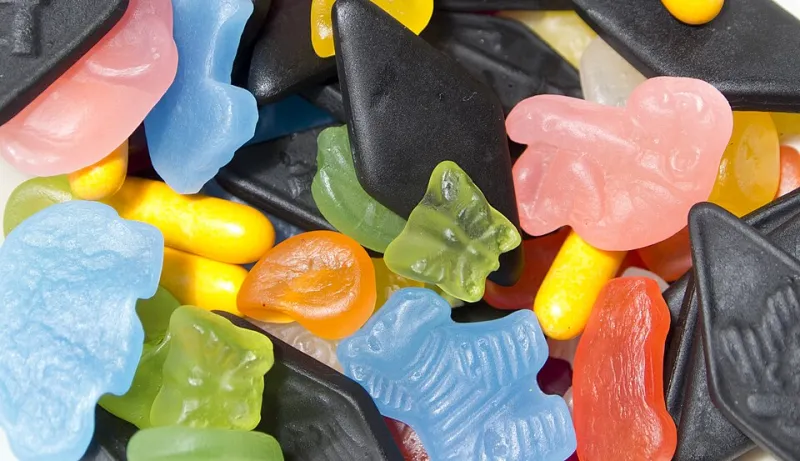
Photo: Tiia Monto, CC BY-SA 3.0, via Wikimedia Commons
By mid-November 2026, the Christmas tubs are already nudging their way onto Bentham’s sweet counters. Red foil, gold lettering, the first of the selection boxes stacked like small fortresses. And somewhere near the back, usually on the lower shelf or in a modest glass jar, sits the black cable itself: liquorice. It is not shouting. It rarely does. But this is exactly the moment to give it a second look.
Liquorice is the most underrated winter indulgence on the high street. It is not as immediately lovable as fudge, nor as photogenic as a custard tart. It divides households. It stains the fingers. It has a flavour that some people describe as medicinal and others as profoundly comforting. But that is the point. Liquorice rewards a slower, more old-fashioned kind of browsing, the sort that happens when the weather has turned grey and the Christmas rush has not quite arrived.
Why liquorice deserves a November moment
There is a practical argument for going early. Once the Christmas counters are fully deployed, attention shifts to mince pies, stollen and boxes of chocolates with optimistic ribbon work. Liquorice becomes background noise. Yet November is when the texture of a good sweet counter is still visible: the trays are not yet crowded out, and the person behind the counter has time to talk you through the difference between a firm cake and a soft eating liquorice.
There is also a sentimental argument. Liquorice is one of those sweets that carries a whole set of memories for people who grew up with it: paper bags, penny sweets, the sharp smell of a jar opened on a rainy afternoon. In Bentham, where the food conversation often turns on cakes, biscuits and preserves, liquorice feels like a small act of defiance. It is not trying to be trendy. It is just quietly being itself.
The crawl: four stops, one black thread
This is less a rigid route than a gentle circuit. Start where the counter is oldest in feel, ideally a shop with a proper glass case and a few jars rather than rows of pre-packed bags. Ask for a Pontefract-style cake first. These small, firm discs are the classic entry point: round, dark and slightly brittle, with a sweetness that arrives after the first bite rather than all at once. They are not chewy in the way of a soft twist. They snap, then soften, then linger.
Next, move to the salty end of the shelf. A good salty twist should be firm but giving, with a clean liquorice flavour and a savoury edge that stops the sweetness from becoming cloying. This is where liquorice starts to make sense as a winter sweet: the salt and the dark, woody flavour sit well against cold air and strong tea. If you find a bag of salty twists that feels almost too hard, leave it for later; a few minutes in a warm pocket is not a bad idea.
Then find the allsorts. Soft allsorts are the friendlier face of liquorice, especially the pastel ones with their little sugar shells and faintly floral centres. They are not sophisticated, but they are cheerful, and they make an easy bridge for anyone who thinks they dislike liquorice. A mixed bag also gives you the chance to compare textures: the firm black pieces, the softer centres, the sugary coating. It is a small education in a paper bag.
Finish with something coated. Liquorice-flavoured chocolate is not the same as chocolate-covered liquorice, and the difference matters. A dark chocolate shell around a firm liquorice centre can be excellent, the bitterness of the chocolate meeting the sweetness of the sweet. Milk chocolate is softer and more indulgent, but it can overwhelm the liquorice if the centre is timid. Buy one or two, not a sack, and eat them before the walk home ends.
Texture notes: firm, salty, soft, coated
The pleasure of a liquorice crawl is largely a texture crawl. Firm Pontefract-style cakes are about the initial resistance and the slow dissolve. Salty twists are about the chew and the savoury finish. Soft allsorts are about the yielding centre and the sugar shell. Coated pieces are about the contrast between snap and chew. If you try all four in one afternoon, you will notice how differently the same flavour can behave.
Sweetness is the other variable. Some liquorice is aggressively sweet, especially the softer, brightly coloured varieties. Others are darker and more restrained, with a bitterness that sits close to aniseed and black tea. Neither is wrong. The trick is to pace yourself. Liquorice is richer than it looks, and a little goes a long way. A small bag shared on a bench is probably the ideal portion.
The nostalgia factor
It would be easy to make too much of the nostalgia, but it is part of the appeal. Liquorice feels like a sweet from another era, even when it is freshly made. It belongs with paper bags, old shop scales and the sort of counters that still keep a few things in jars. For anyone who remembers buying sweets with a few coins, the smell alone is enough. For anyone who does not, it is a chance to try something that has not been engineered for maximum appeal.
That lack of polish is the point. Liquorice does not try to please everyone. It is dark, slightly awkward and very old-fashioned. In a town like Bentham, with its independent food shops and its affection for a proper counter, that feels entirely appropriate.
Before the Christmas rush
Go now, while the shelves still have room for a black cable or two. Buy a small selection rather than a single bag: one firm cake, one salty twist, a few allsorts and a coated piece. Take them home, make a strong cup of tea and give them a proper tasting. You may decide liquorice is not for you. That is fine. But you may also find that the most divisive sweet on the counter is the one worth returning to, long after the Christmas tubs have been opened and forgotten.