The Quiet Loaf: A Mid-November Tea-Bread Trail Through Bentham
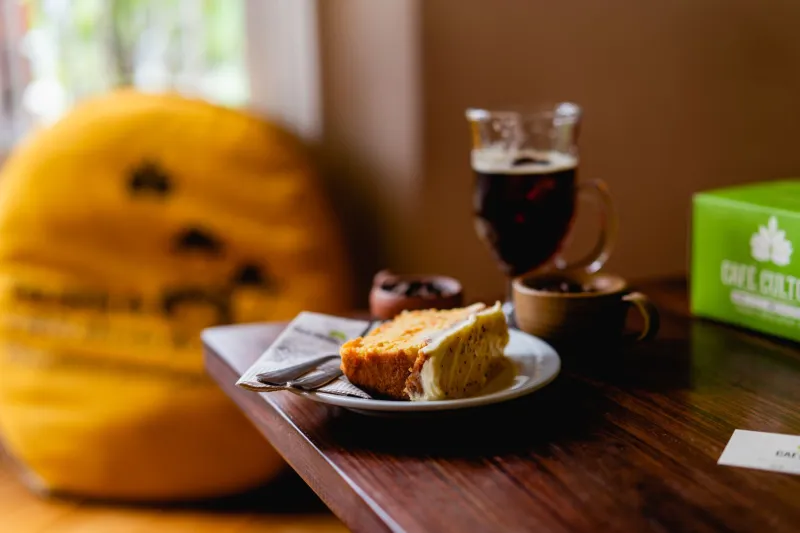
Mid-November is an awkward moment in the food year. The shelves have already gone full tinsel, the advent boxes are stacked by the door, and yet it is still dark enough by half past four to want something plain and warming rather than glittery. This is the week for tea loaf: not a showpiece, not a gift-box centrepiece, just fruit, crumb and a cup of something strong.
Bentham does this sort of baking quietly and well. You will not find a tea-loaf trail marked on any map, and that is rather the point. What follows is a short circuit of the counters that sell the stuff — bakery, deli, farm shop — plus a few notes on how to eat it, when to eat it and whether the Wensleydale should ever leave the fridge.
First, the family tree
Tea loaf, Yorkshire brack and malt loaf are cousins rather than identical twins. A tea loaf is usually the lightest of the three: dried fruit soaked in strong tea, a soft crumb, a thin crust, a slice that holds together but does not fight back. Brack tends to be darker and a little more spiced, sometimes with a boozy edge, and often a touch denser. Malt loaf is the chewiest of the lot — sticky, almost treacly, the sort of thing that clings to the roof of your mouth in a way that is either deeply comforting or mildly alarming, depending on your temperament.
The useful measure is the fruit-to-crumb ratio. Too little fruit and you have a plain cake pretending to be something more; too much and the loaf crumbles before it reaches the butter. A good tea loaf sits somewhere around forty per cent fruit by weight, give or take, with enough crumb to cushion each slice. Brack can push closer to half and half. Malt loaf is less about visible fruit and more about a dark, malty glue that holds the whole enterprise together.
Stop one: the counter with the clingfilm
Start where the loaves are cut to order. A bakery counter in the middle of town, the sort with a few foil trays and a chalkboard that has seen better days, is the right place to begin. Here the tea loaf is often sold by the slice or as a small oblong, wrapped in clingfilm if you are taking it away, or handed over in a paper bag if you are eating it on the spot.
This is day-one bread. The crust still has a little snap, the crumb is soft, and the fruit has not yet had time to settle into the surrounding loaf. Ask for it thick — a thin slice of tea loaf is a sad, dry thing — and eat it within sight of the counter if you can. A flask of tea in the car counts. So does a bench, a coat collar turned up and five minutes of not looking at Christmas displays.
Stop two: the deli with the tinned loaves
The second stop is the deli, where the loaves tend to be whole, wrapped in greaseproof paper and stacked beside the preserves. These are the ones to buy for later. A tea loaf that has spent three days in a tin is a different creature: the fruit has softened into the crumb, the crust has given up any pretence of crispness, and the whole thing slices more cleanly. It is not better or worse than day-one loaf, just further along.
Buy one here, take it home and resist it until Thursday. If you cannot resist it, buy two. The deli loaves are also the ones most likely to come with a provenance note — a bakery name, a market town, a recipe that has been passed around — though none of that matters if the fruit-to-crumb ratio is off. Trust the slice, not the label.
Stop three: the farm shop on the edge
The last stop is the farm shop, a short walk out past the last of the terraces, where the shelves lean towards malt loaf and brack rather than delicate tea breads. This is where you go if you want something sticky and dark, the sort of loaf that improves with a day or two in paper and then demands salted butter.
Malt loaf is the great divider. Some people find it too chewy, too sweet, too reminiscent of a school lunchbox. Others — and this is the correct camp, though I say so quietly — find it the ideal mid-afternoon stopgap. A thick slice, a thin scraping of butter, a mug of tea. Nothing festive. Nothing dusted with icing sugar. Just the quiet pleasure of a loaf that knows what it is.
The butter question, and the Wensleydale question
Salted butter is not optional. Unsalted butter on tea loaf is a missed opportunity; the salt cuts through the fruit and makes the whole thing taste more like itself. Spread it thickly enough that you leave tooth marks in it. If you are eating malt loaf, you can go thicker still.
Wensleydale is a different matter. The cheese-and-fruit pairing has its champions, and a thin slice of Wensleydale alongside a piece of brack is not the crime some would have you believe. But on the loaf? No. The cheese fights the tea, the crumb goes soggy, and you end up with a mouthful that is neither one thing nor the other. Keep the Wensleydale for the cheeseboard and the tea loaf for the plate. They can share a table, but not a slice.
The route, roughly
Start at the bakery counter in the centre of town, walk five minutes to the deli, then take the fifteen-minute stroll out to the farm shop and loop back. The whole thing is under an hour at a gentle pace, which leaves time for a second cup of tea and a sit-down. Take a tin or a paper bag for the loaves you are bringing home, and do not put them in the fridge — a cool cupboard is fine, a bread bin is better.
Day one versus day three
Day one: crust crisp, crumb soft, fruit bright. Best with salted butter and a hot drink. Do not overthink it.
Day three: crumb settled, fruit mellow, slices cleaner. Best with salted butter and a slightly cooler drink, or toasted very lightly under a grill until the edges just catch. Malt loaf on day three is stickier and more agreeable than on day one; tea loaf on day three is quieter but no less welcome.
Beyond day five, tea loaf starts to dry at the edges. That is not a disaster. A slice pressed into a hot oven for a minute, or fried in a little butter until crisp, is a perfectly good use of a loaf that has done its duty. But the best of it is in that first week, in the lull before December properly begins, when a slice of fruit bread and a mug of tea is still enough to count as an event.