The Clotted Divide: How Bentham’s Tea Rooms Choose Sides
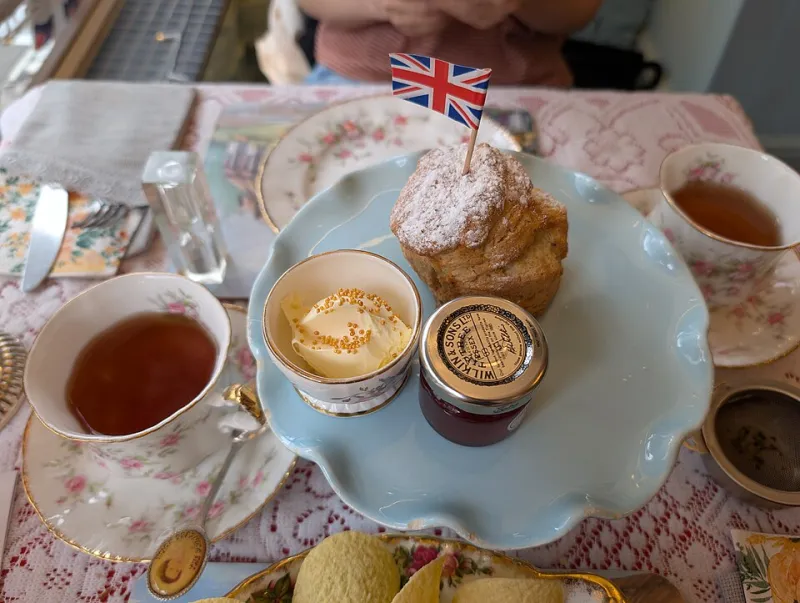
Photo: Andy Li, CC0, via Wikimedia Commons
Bentham is not Devon. It is not Cornwall. It is a small town in North Yorkshire, which means it has no coastline to defend and no historical claim to the cream tea. And yet the argument has arrived anyway. In tea rooms and cafés around Bentham, the question of whether jam or cream goes first is not treated as a harmless bit of West Country lore. It is treated as a test of character.
What the Argument Is Really About
On paper, the Devon versus Cornwall debate is about order. Devon says cream first, then jam. Cornwall says jam first, then cream. On a plate, the difference is small. In a tea room, it is enormous. The order changes the texture of the mouthful, the look of the scone and the confidence with which the person opposite you reaches for the knife.
It is also about what a cream tea is for. If the cream is treated as butter, it goes first. If the jam is treated as the base note, it goes first. If the scone is warm, cold cream will seize. If the scone is cold, warm jam will run. These are not trivial matters when you are paying for a pot of tea and a sit-down.
The Scone Itself
Before sides are chosen, the scone has to be right. A cream tea scone should be plain or lightly fruited, with a crust that gives way rather than shatters. It should be warm enough to soften the cream but not so hot that the jam slides off. A scone that crumbles into dust the moment you cut it is not a scone; it is a biscuit with delusions.
In Bentham, the best scones tend to be the plain ones. Fruit is fine, but it complicates the jam. If you are already using strawberry or raspberry jam, a sultana in the scone is just another voice in the argument. The best cream tea is a study in three things: scone, cream, jam. Anything else is a distraction.
The Case for Jam First
The Cornish method has logic on its side. Jam is sticky. It needs something to sit on. Put jam on a warm scone and it spreads; put cream on top and you have a layer that holds the whole thing together. The acidity of the jam also cuts through the fat of the clotted cream, which is why the first bite tastes bright rather than cloying.
There is a practical argument too. Jam first means you can see how much jam you have used. Cream first means the jam sits on a slippery surface and slides about. If you are the sort of person who likes a controlled mouthful, jam first is the safer bet.
The Case for Cream First
The Devon method is not irrational. Clotted cream is rich, thick and slightly sweet. Treated as the first layer, it acts like butter: it binds the scone, softens the crumb and gives the jam something to cling to. A thin layer of cream first also stops the jam from soaking straight into the scone, which keeps the texture from going soggy.
The Devon case is strongest when the cream is properly clotted and at room temperature. Cold cream straight from the fridge will tear the scone. Whipped cream is not clotted cream; it is a different thing altogether. If a tea room serves cream first with a generous spoonful of proper clotted cream, the method has a certain nobility.
What Bentham Actually Does
Ask around and you get a split. One regular at a High Bentham tea room tells me she was brought up cream first and will not be moved. A café owner in Low Bentham says she serves jam first because customers expect to see the fruit. Another puts both on the table and lets the diner decide, which is either diplomatic or cowardly, depending on your mood.
What is clear is that Bentham does not have a single cream tea tradition. It has several, imported from holidays, family kitchens and the sort of arguments that start in caravans and never quite end. That is not a weakness. It is a sign that the town takes pleasure seriously enough to disagree about it.
The Benthamite Compromise
My proposal is not a fudge. It is a Benthamite compromise: jam first, cream second, but with conditions. The scone must be warm. The cream must be clotted, not whipped, and not fridge-cold. The jam must be sharp enough to argue back. And the tea must be strong enough to clear the palate between scones.
This is, essentially, the Cornish method with Yorkshire discipline. It gives you the brightness of jam first and the richness of cream second. It also avoids the Devon problem of jam sliding off a cream-covered scone. If you are going to pick a side in Bentham, pick the side that lets the jam do its job.
The Verdict
I am with Cornwall, but not with the theatrical version. Jam first, cream second, scone warm, cream room-temperature, pot of tea on the table. If a tea room in Bentham serves it that way, it has understood the assignment. If it serves cream first, I will still eat it. I will just have a second scone to be sure.